
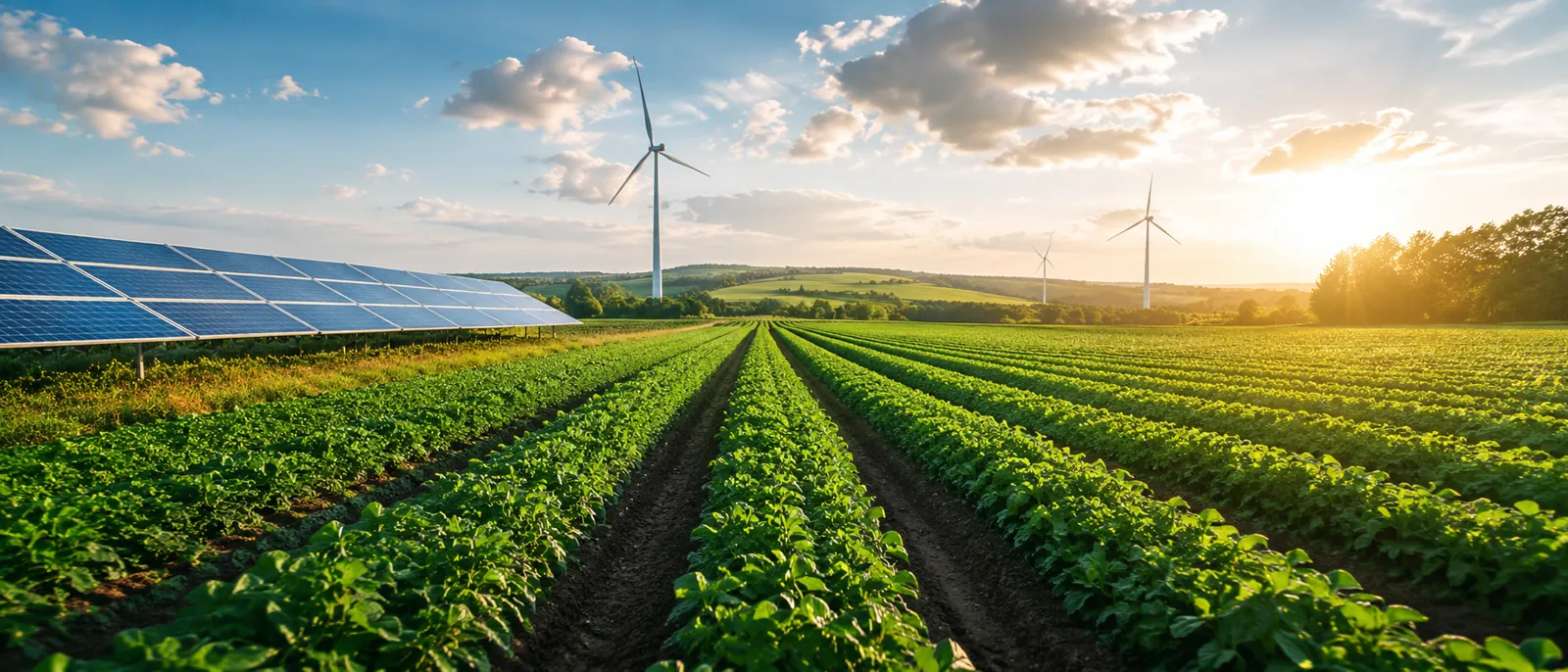
Climate change, dwindling resources, and rising food demand have brought agriculture to the threshold of a new transformation. At the center of this transformation lies the combination of sustainable agricultural practices and renewable energy. When the two come together, a production model emerges that is both environmentally responsible and economically strong.
What Is Sustainable Agriculture?
Sustainable agriculture is agricultural production carried out while conserving natural resources, avoiding harm to the environment, and not jeopardizing the production capacity of future generations. Efficient use of water resources, preserving soil health, supporting biodiversity, and reducing chemical use are the core principles of this approach.
Sustainable agriculture aims for long-term balance rather than short-term yield. Producing without exhausting the soil, wasting water, or depleting nature benefits both the environment and the economy.
Renewable Energy's Place in Agriculture
Energy is one of the significant cost items in agricultural production. Irrigation, processing, storage, and packaging all require substantial amounts of energy. Renewable energy, especially solar power, lowers this cost while also reducing the carbon footprint.
Solar energy systems make it possible to meet the energy needs of agricultural facilities from a clean and sustainable source. Solar power plants installed on farmland and at production facilities provide both energy independence and a significant economic advantage in the long run.
Where the Two Fields Meet
Sustainable agriculture and renewable energy are two complementary fields. Solar-powered irrigation systems, energy-efficient processing facilities, and storage solutions supported by clean energy make every stage of production more sustainable.
This integration provides businesses with three key benefits: lower energy costs, a reduced carbon footprint, and a transition to sustainable production models. This means a future that is strong both environmentally and economically.
The Production Model of the Future
The agriculture of the future will be built on a model that is in harmony with nature and energy-independent. The combination of sustainable production methods and renewable energy will increase productivity while protecting the environment, and lower costs while raising quality.
At Harmas, we carry our vision of a sustainable future beyond agricultural production; through our activities in renewable energy, we fulfill our responsibility to production, to nature, and to the future.