
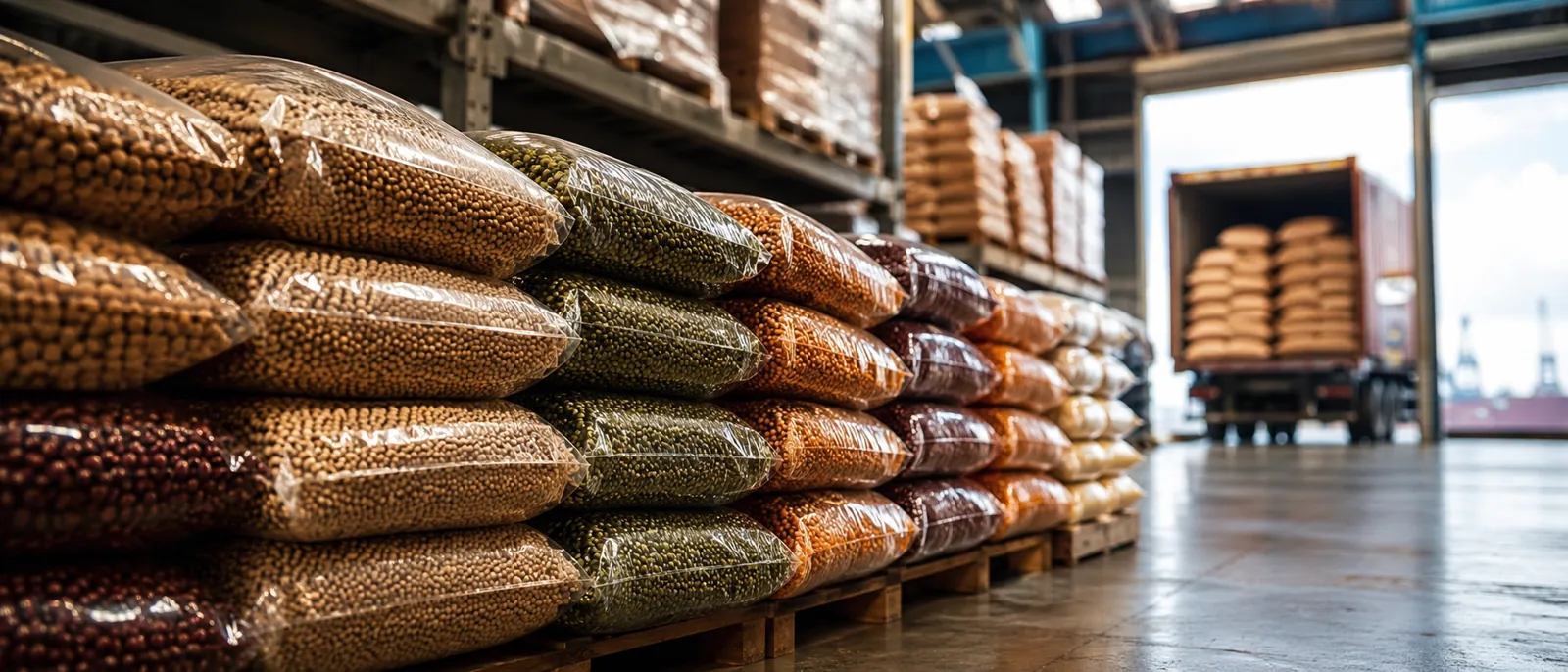
Turkey is one of the world's leading countries in pulse production and export. Chickpeas, lentils, and beans grown in the fertile lands of Anatolia reach the tables of dozens of countries after passing through strict quality controls. So what standards govern this global journey of a pulse product?
The Quality Gateway of Export
Export is a demanding process that requires the product to meet the highest quality standards. Every country has its own food safety regulations, import criteria, and quality expectations. The exporter must have a production and control infrastructure capable of meeting all of these different standards.
During this process, the product is tested repeatedly for physical quality, chemical safety, and microbiological cleanliness. Only products that fully meet all of these criteria receive approval for export.
International Food Safety Standards
In global food trade, internationally recognized quality and safety standards play a decisive role. These standards cover a broad range of areas, from the hygiene conditions of production facilities and the control of production processes, to product traceability and quality management systems.
Compliance with these standards is not merely a document — it is international proof of the product's reliability and quality. Holding these certifications is a prerequisite for entering export markets.
Physical Quality Control
Pulses destined for export undergo strict physical quality controls. Caliber uniformity, color standard, broken grain ratio, foreign matter content, and moisture level are all meticulously measured. In modern processing facilities, optical sorting systems ensure the product reaches the desired level of purity.
These controls guarantee that the product precisely meets the expectations of the target market. Since each market has different caliber and quality preferences, the product is classified and prepared according to the relevant market.
Packaging and Logistics
Quality in export is not limited to the product itself. Packaging ensures the product retains its quality during long-distance transport. The right packaging material, proper packaging conditions, and careful logistics management make it possible for the product to reach its destination with the same freshness as its first day.
Modern packaging facilities offer a variety of packaging options to suit the demands of different markets. Packaging can be done across a wide range, from 200-gram retail packs to ton-scale industrial packaging.
Conclusion
The journey of pulses from Anatolia to tables around the world is made possible by strict quality standards, meticulous controls, and a professional production infrastructure. Compliance with international standards, traceability, and quality assurance are the cornerstones of this journey. At Harmas, with our pulse products manufactured to international standards, we confidently carry the flavors of Anatolia to markets around the world.