
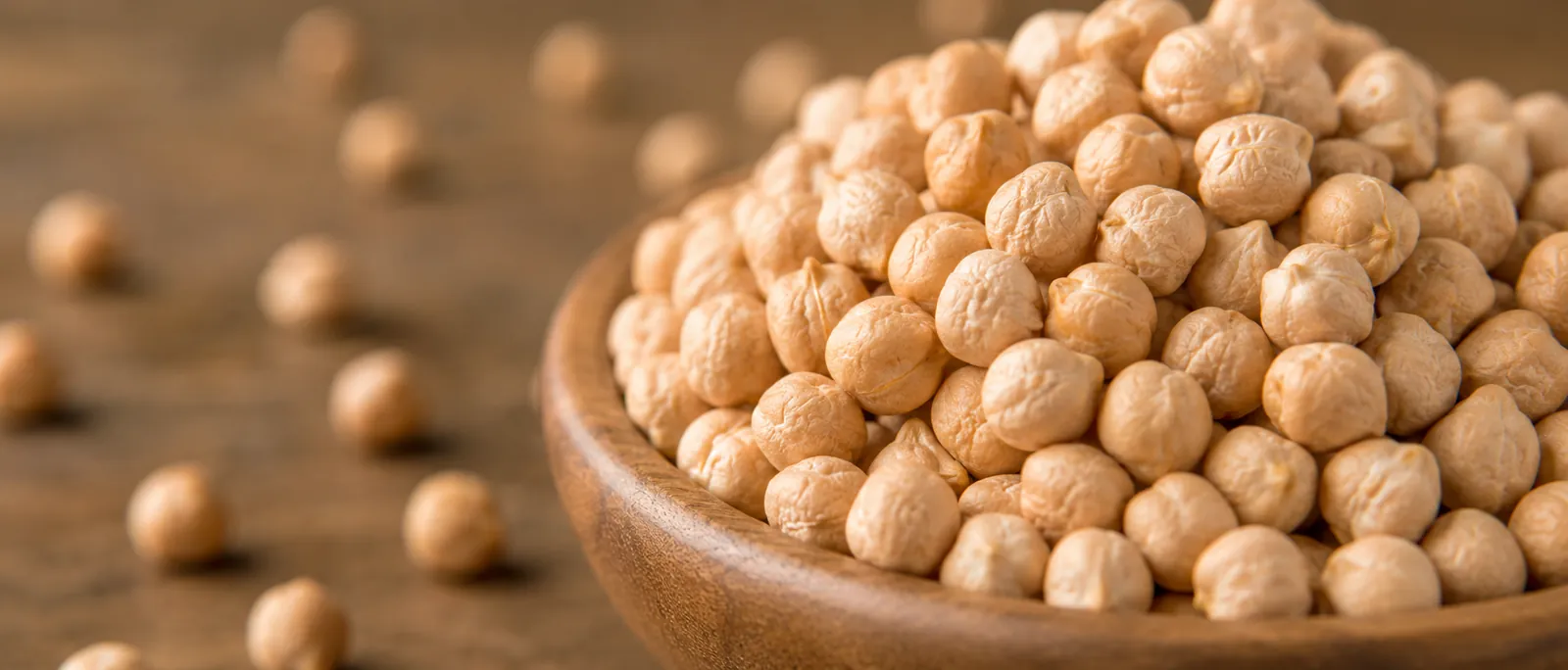
Chickpea is not only an indispensable pulse in kitchens around the world, but also a product subject to rigorous quality standards in the export market. So what determines whether a chickpea is high quality? The answer lies in an evaluation process far more technical than it appears.
Caliber: The Identity of the Chickpea
The first step in evaluating chickpea quality is caliber. Caliber refers to the diameter of the chickpea grain in millimeters, typically starting at 7 mm and going up to 12 mm and beyond. The larger the grain diameter, the more valuable the chickpea is considered; calibers of 9 mm and above are particularly preferred for both appearance and cooking quality.
Caliber classification is done by passing the chickpeas through sieve systems and sorting them into homogeneous groups. Having all the grains in a batch at the same caliber ensures both an even cooking time and visual consistency. For this reason, caliber uniformity is one of the most important indicators of a quality chickpea batch.
Color and Appearance
Quality chickpea should have a homogeneous color between light cream and golden yellow. Color variation, dark spots, or faded grains give clues about harvest conditions, storage errors, or grain aging. A bright, vivid color is an indicator of freshness and proper processing.
The surface of the grain also matters. Wrinkling, shriveling, or hull damage indicate moisture loss and a decline in quality. An ideal chickpea should have a plump, smooth, and symmetrical structure.
Moisture Content: The Invisible Quality Factor
The moisture content of the chickpea directly affects both storage life and cooking quality. High moisture increases the risk of mold and spoilage, while excessively low moisture causes the grain to become brittle. The ideal storage moisture range is generally 10-12%. This balance allows the product to retain its quality over a long period.
Grain Integrity and Foreign Matter
In a quality chickpea batch, the proportion of broken grains, foreign matter, and weed seeds must be kept to a minimum. In modern processing facilities, optical sorting systems use color cameras to sort out defective grains and foreign matter within seconds. This technology delivers a level of purity far beyond manual sorting.
Conclusion
Chickpea quality is a holistic concept in which caliber, color, moisture, and grain integrity are evaluated together. In this process spanning from field to table, the right harvest timing, careful processing, and controlled storage are the fundamental factors determining quality. At Harmas, we process every chickpea batch according to these rigorous criteria and offer reliable products to international standards.